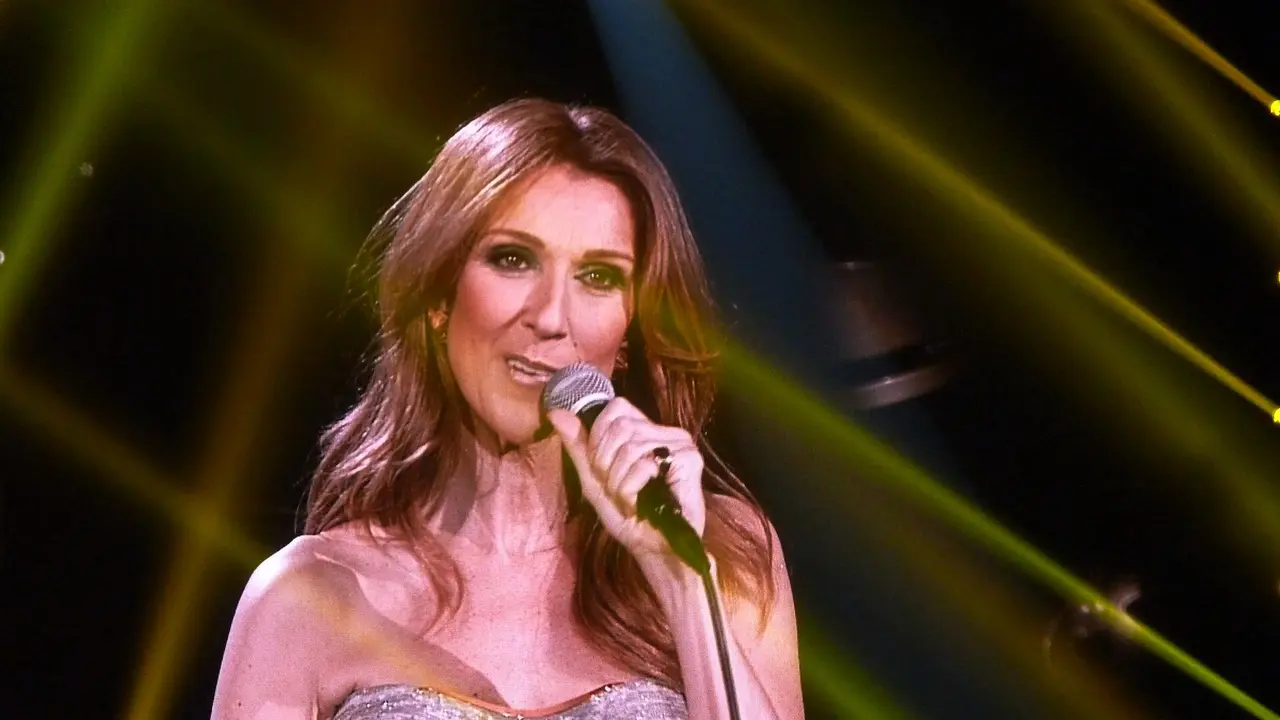
Paris is not just preparing to host a series of concerts. The capital is set to become the stage for one of the most closely watched comebacks in global music. Céline Dion has arrived in France to rehearse for her residency at the Plenitude Arena, where she is set to reunite with the audience starting September 12, 2026. The Associated Press reported on August 29 about fans gathering outside her Paris hotel and confirmed a series of 16 shows scheduled for September and October. After six years away from touring, each rehearsal, each appearance, and every production detail now takes on the dimension of an event.
The official title, “Céline Dion Paris 2026-2027,” already announces the ambition: to establish a residency in Paris that brings together the artist’s major French and English hits. The choice of France is not trivial. For a Québécois singer who has become a global superstar, Paris remains both an emotional stage, a historic market, and a gateway to Europe. Her return thus speaks to multiple audiences at once: the loyal fans from the beginning, the generations who discovered her through streaming, and all those who follow her fight to return to the stage.
A Return Made Profoundly Human by Illness
Céline Dion revealed in 2022 that she is suffering from Stiff-Person Syndrome, a rare neurological disorder that can cause stiffness and muscle spasms. This reality changes the way her return is perceived. It is not merely a new promotional cycle, but the culmination of a physical, vocal, and medical journey conducted under immense public pressure. RTL reported this week on a highly structured preparation and a period of silence intended to protect and rebuild her voice.
Prudence remains essential. No one outside of the artist and her team can accurately gauge what each night will represent. But it is precisely this uncertainty that gives the event a particular strength. The audience is not expecting a demonstration of abstract perfection. They are waiting for a presence, a regained voice, and proof that a career can resume after being abruptly suspended. Without turning her illness into a spectacle, this residency tells a universal story: returning is never about returning to the same place.
Sixteen Concerts and a Production Designed as a World
The official website of Céline Dion and the Plenitude Arena announces dates from September 12 to October 17. The series, produced by AEG Presents, Concerts West, and Inter Concerts, is set to deploy a scenography specifically designed for this Parisian installation. The stakes go beyond a classic tour: when an artist stays in the same venue for several weeks, the production can gain in precision, visual scope, and narrative coherence. The screens, sound, transitions, and audience flow cease to be elements dismantled each night and become a permanent architecture.
Le Monde explains that the singer has worked in Las Vegas, recorded tracks for her upcoming French album, and filmed footage intended for the venue’s screens. This method connects two capitals of her story. Las Vegas allowed her to transform the residency model in the early 2000s; Paris must now host her reinvention. The show is thus set to serve as a bridge between a monumental career and a new chapter whose rhythm is yet unknown.
Paris Aims to Become the New Capital of Residencies
Céline Dion’s return comes at a time when the live industry is changing its model. Residencies are no longer reserved for Las Vegas casinos. Adele in Munich, major concert series in London or Madrid, and spectacular installations in European arenas show that fans are now willing to travel for an artist as they would for a festival or a sports final. The concert becomes the centerpiece of a complete stay, including hotel, dining, transport, shopping, and cultural tourism.
For Paris, this operation is strategic. A residency of 16 dates attracts an international audience over several weeks and gives the city continuous visibility. It also allows the Plenitude Arena to defend its place among the great global venues. Le Monde emphasizes that the model launched by Dion in Las Vegas has contributed to increasing concert attendance and the average ticket price. Exported to Europe, it can become a powerful driver of musical tourism, but also a test of price accessibility and the capacity of infrastructures to absorb repeated flows.
A Global Artist, Two Languages, and Multiple Generations
The strength of Céline Dion lies in her ability to transcend borders without erasing her Francophone identity. She can make an audience sing along to “Pour que tu mâaimes encore” and then switch to “My Heart Will Go On,” uniting audiences that do not share the same age or language. Few artists possess such an immediately recognizable catalog, built between French song, international pop, film soundtracks, and grand ballads.
This dual culture gives the Parisian residency a special significance. It is not merely the return of a star to the French market; it is the meeting of a global icon with one of her foundational lands. In an industry dominated by rapid trends, viral snippets, and weekly releases, Dion represents another form of power: a relationship patiently built with the audience. Social media will certainly amplify every image, but the essence will play out in the venue, at the moment when the first note breaks six years of waiting.
The Signal the Industry Cannot Ignore
If the residency fulfills its promise, it will send a strong signal to producers and European venues. Established artists can build rarer, longer, and more immersive events without immediately hitting the road again. This model reduces certain logistical costs and allows for more complex productions. However, it also concentrates risks: the artist’s health, the venue’s availability, and demand must remain solid over several weeks.
For Céline Dion, the calculation is obviously not limited to economics. Paris is the place where she can regain control of the narrative. For years, news about her health has spoken for her. This time, the audience is waiting to hear from her directly, in her most direct artistic language: singing. Her arrival in the capital thus marks a turning point. She is no longer just an object of concern or nostalgia; she becomes an artist in preparation, surrounded by a team, a schedule, and ambition.
Why the World Will Watch Opening Night
On September 12, the opening night will be much more than a concert date. It will be a moment of truth, likely fragile, but already historic due to the anticipation it holds. Fans will seek the voice they know; the industry will observe the viability of a giant European residency; Paris will measure its attraction power; and Céline Dion will simply attempt to reconnect with a venue that no streaming can replace.
The artistic outcome should not be predicted before it exists. But one certainty already stands out: this return has transcended the realm of musical promotion. It speaks of resilience, time, work, and the irreplaceable value of live performance. For five weeks, Paris will be the city where a global voice seeks a new beginning. And the world, this time, will listen differently.
Sources
- Associated Press â Céline Dion Arrives in Paris Ahead of Her Residency, August 29, 2026
- Le Monde â From Las Vegas to Paris, the Economic Model of Residencies, August 29, 2026
- CélineDion.com â Official Announcement of the Return to Paris
- Plenitude Arena â Dates and Production of Céline Dion Paris 2026
- RTL â Céline Dion’s Vocal Preparation, August 24, 2026