EU Intensifies Contacts with Taliban to Manage Afghan Migrant Returns
Despite no official recognition, the EU engages in discreet talks with the Afghan Taliban on migrant deportations, diplomatic representation, and economic aid, highlighting a dilemma between principles and political realities.
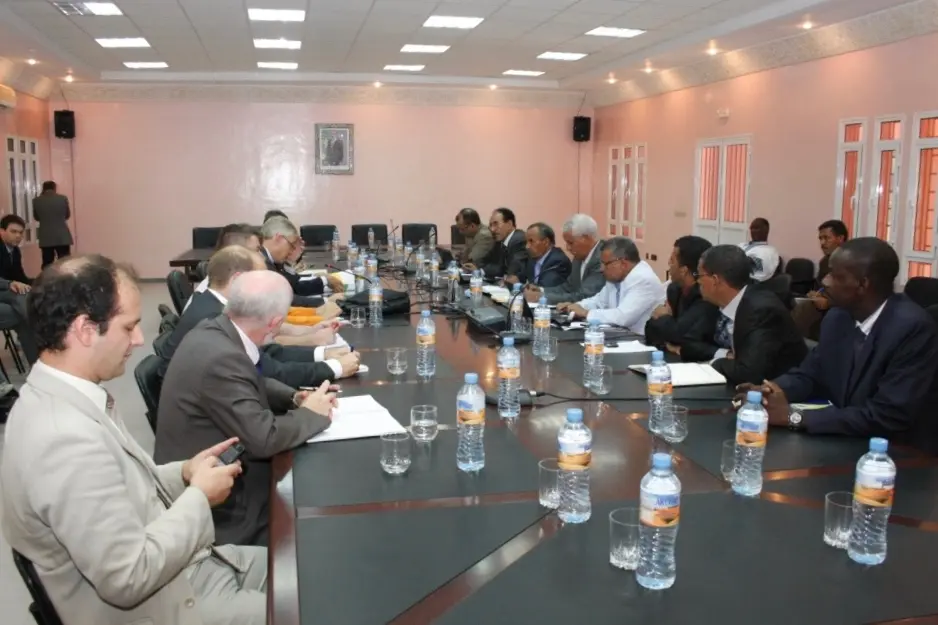
Faced with the economic and humanitarian crisis hitting Afghanistan, the European Union (EU) has adopted a pragmatic strategy by intensifying its contacts with the Taliban authorities. Although the Taliban regime is not officially recognized by Brussels, European governments are discreetly increasing negotiations to manage the returns of Afghan migrants and attempt to stabilize the region. This approach reveals a tension between formal diplomatic refusal and the political necessity to engage with an unavoidable actor on the ground.
A deep economic crisis in Afghanistan
Since the Taliban took power in August 2021, Afghanistan has been going through a major economic crisis. The country is facing a sharp contraction of its economy, worsened by the withdrawal of international aid and sanctions imposed on the Taliban administration. This situation has direct repercussions on the population, which is confronted with increased precariousness, a high unemployment rate, and growing food insecurity.
In this context, Afghan migrants returning from Europe to their country of origin face a very difficult reality. According to testimonies reported in a New York Times investigation, these forced returns are often synonymous with disillusionment, as economic conditions offer them very few prospects. This humanitarian crisis accentuates the complexity of relations between the EU and the Taliban regime, even as the latter remains largely isolated on the international stage.
Discreet negotiations despite the absence of official recognition
Despite the absence of official recognition of the Taliban regime by the European Union, European governments have multiplied contacts with Afghan authorities in recent months. According to a New York Times investigation relayed by France 24, these exchanges focus on sensitive subjects such as deportations of Afghan migrants, diplomatic representation, and economic assistance.
Elian Peltier, head of the Pakistan and Afghanistan bureau for the New York Times, points out that “even if on paper European governments do not recognize the Taliban administration, in practice they meet much more frequently than most of us know.” This reality highlights a fundamental contradiction between the official stance of refusal to recognize and the pragmatic necessity to engage with a de facto power.
A pragmatic strategy to manage migratory flows
The increase in contacts between the European Union and the Taliban fits within a pragmatic logic aimed at better managing the returns of Afghan migrants. Since the Taliban took control, Afghanistan has become a major point of origin for migrations to Europe. European authorities therefore seek to establish a dialogue to organize repatriations and avoid chaotic returns that could worsen the humanitarian situation.
Beyond the migration issue, these discussions also address diplomatic representation and economic aid, two crucial challenges in attempting to stabilize a country in crisis. The EU must thus juggle between maintaining its political principles, notably the refusal to legitimize the Taliban regime, and the necessity of pragmatic cooperation to prevent a wider regional destabilization.
A lasting political and humanitarian dilemma
This situation reflects a major political and humanitarian dilemma for the European Union. On one hand, the refusal to officially recognize the Taliban is based on considerations related to human rights, governance, and international legitimacy. On the other hand, the reality on the ground imposes dialogue with a regime that effectively controls Afghanistan and whose cooperation is essential to manage migratory flows and respond to the economic crisis.
The Afghan case thus illustrates the tensions between principles and pragmatism in European foreign policy, where humanitarian and security issues require a certain flexibility. As the situation in the country remains precarious, the EU will have to continue navigating between these contradictory demands to try to provide an effective and responsible response.
Sources: New York Times, France 24