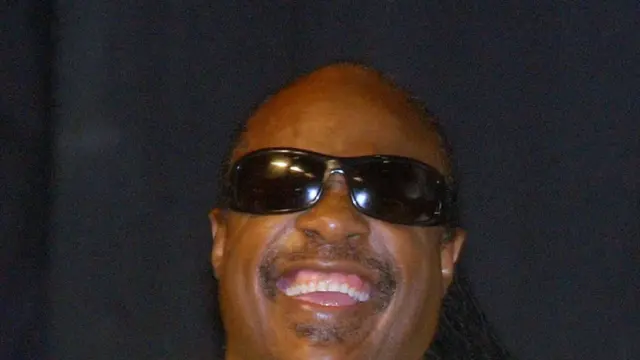
A secret album by George Michael, conceived in the early 1990s with a constellation of legends, suddenly resurfaces to haunt the global pop scene. Its name: Trojan Souls. The project was meant to showcase the British star’s voice alongside those of Elton John, Stevie Wonder, Sade, Seal, Aretha Franklin, Janet Jackson, and Bryan Ferry. It was never completed or released. However, more than thirty years after the sessions, the existence of recorded vocals for a duet with Elton John raises an explosive question: can this treasure finally emerge from the archives?
The answer requires resisting the excitement. A song titled âThis Kind of Loveâ does exist within the project’s history, and vocal parts from George Michael and Elton John are said to have been recorded separately. However, no official single has been announced to date. Andros Georgiou, George Michael’s cousin and former manager, aims to bring the voices together and secure the necessary permissions. Between this dream and a global release stand the artist’s estate, rights holders, record labels, and Elton John’s agreement.
Trojan Souls, the Impossible Album That Brought Together Giants
In the early 1990s, George Michael was no longer just the former half of Wham!. After Faith and Listen Without Prejudice Vol. 1, he had become a songwriter, producer, and performer capable of directing ambitious sessions himself. Trojan Souls was born in this moment of creative power. The idea was not merely to assemble a simple album of duets by a record label: Michael was to write, produce, and build a shared universe for voices he admired.
The list associated with the project seems almost unreal today. Stevie Wonder, Sade, Seal, Janet Jackson, Aretha Franklin, Elton John, and Bryan Ferry were among the artists invited or considered throughout the sessions. Footage shot in 1993 captures the behind-the-scenes of this adventure. It now forms the basis of a documentary led by Andros Georgiou, presented under the title Trojan Souls â The Greatest Album That Was Never Made.
The Intimate Drama That Interrupted the Music
The abandonment of Trojan Souls was not merely a commercial decision. In March 1993, Anselmo Feleppa, George Michael’s partner, died from complications related to AIDS. This loss profoundly affected the singer and shattered the momentum of the project. The professional context was also tense: George Michael entered into a high-profile conflict with Sony over his contract and control of his career.
These two fractures, one intimate and the other industrial, give the secret album a particular weight. It is not just about forgotten tapes in a vault. Trojan Souls belongs to a turning point in the artist’s life, at a moment when his global fame, his mourning, and his struggle for autonomy intersect. This is also why any attempt at publication must avoid turning a painful period into mere nostalgic product.
âThis Kind of Loveâ: What Is Confirmed and What Is Not
The song most likely to be released is âThis Kind of Love.â According to reports from various music media, Andros Georgiou has a recording of George Michael and a part sung by Elton John. His ambition is to construct a finalized version that brings these elements together. He also claims to have filmed an exclusive interview with Elton John for the documentary.
Three nuances are essential. First, having two recorded voices does not mean a finished master exists. Second, Georgiou states he wants to seek permission from Elton John: this permission is therefore not presented as guaranteed. Third, George Michael’s estate and the rights holders must validate the exploitation. No release date, platform, or label has been officially confirmed.
The documentary itself is still seeking broader distribution. An online presentation or an approach to platforms does not equate to a distribution contract. The most credible short-term scenario is therefore one of renewed interest, not one of guaranteed imminent release. This distinction protects the public from false promises and respects the legal complexities of musical archives.
George Michael and Elton John: A Story Already Entered into Legend
If the idea of a new duet provokes so much emotion, it is because the two artists have already created one of pop’s great moments. Their public performance of âDonât Let the Sun Go Down on Me,â recorded in 1991 and subsequently released, reached number one in both the UK and the US. The song transcended the concert setting to become a symbol of their musical camaraderie.
George Michael also provided backing vocals for Elton John’s songs in the 1980s. After Michael’s death in December 2016, Elton John regularly praised his talent as a songwriter and singer. A completed version of âThis Kind of Loveâ would therefore not be a manufactured association between two famous names; it would extend a documented artistic relationship spanning several decades.
The Great Ethical Question of Posthumous Voices
The return of Trojan Souls comes at a time when the music industry is multiplying reissues, restored demos, and posthumous releases. Digital tools allow for the cleaning of old tapes, isolating a voice, or reconstructing an arrangement. However, this technical power does not address the main question: would the artist have wanted the result to be heard in this form?
In George Michael’s case, caution is even more important as he was known to be meticulous in the studio and very attached to controlling his work. A work take is not necessarily an interpretation he deemed ready. Respecting his legacy therefore requires total transparency regarding the origins of the tracks, contemporary production choices, and any potential lack of final validation by the singer.
The use of artificial intelligence would constitute an even more sensitive line. Nothing in the available information establishes that a synthetic voice is being considered for âThis Kind of Love.â The described track, on the contrary, relies on recorded voices. If the project advances, producers will need to clearly explain the techniques used to avoid any confusion between restoration, editing, and artificial generation.
A Global Potential, from London to Paris
George Michael retains a considerable audience in Europe, North America, and well beyond. In France, âCareless Whisper,â âFaith,â âFreedom! â90,â and âLast Christmasâ continue to traverse radios, platforms, and generations. Elton John possesses the same ability to unite historical audiences and younger listeners, as evidenced by his recent collaborations and the longevity of his catalog.
The project also benefits from an ideal narrative for platforms: unseen footage, a lost album, global stars, and a song likely to be reborn. But its interest goes beyond nostalgia. Trojan Souls tells a time when an artist at the top wanted to use his power to bring together Black voices, both British and American, around an authorial work. This ambition still resonates in an industry obsessed with instant collaborations.
Why This Rediscovery Could Matter in Pop History
If the archives are sufficiently complete, Trojan Souls could alter our understanding of George Michael’s trajectory between Listen Without Prejudice and Older. The sessions would shed light on his production methods, his choices of performers, and how he viewed the duet not as a promotional exercise, but as a meeting of vocal identities.
However, it remains possible that the project will primarily be a documentary, accompanied only by short authorized excerpts. It is also possible that a song will be finalized without the entire album being completed. The important thing is not to confuse the historical value of the images with the existence of a finished record. The title of âthe greatest album never madeâ expresses a promise and a regret; it does not constitute a definitive musical evaluation.
The Signal That Fans Cannot Ignore
For now, one certainty prevails: the silence surrounding Trojan Souls has been broken. The sessions are no longer a rumor reserved for collectors. They are back in public debate with witnesses, images, and the hope of a George Michael-Elton John duet. This reappearance is enough to trigger a global wave, as it touches both the void left by the artist and the desire to discover what he was creating away from the public eye.
The next steps will depend less on enthusiasm than on very concrete decisions. A legal agreement, a defensible artistic method, and an honest presentation of the state of the tapes will be necessary. If these conditions are met, âThis Kind of Loveâ could become much more than a posthumous curiosity: the last public meeting of two voices that have already marked history. Otherwise, the documentary will at least have made visible one of the most vertiginous dreams of British pop.
Sources
- The Guardian â story of Trojan Souls, sessions, and personal context of George Michael, July 27, 2026.
- TRIBE Media â presentation of the documentary and list of artists filmed during the sessions, June 21, 2026.
- MusicRadar â statements on the voices of âThis Kind of Loveâ and the permissions still needed, July 22, 2026.
- NME â status of the duet project and reminder of the collaborations considered, July 22, 2026.
- Official Elton John website â history of the artistic relationship with George Michael, accessed July 28, 2026.