Ikea has just reminded the market of a simple truth that luxury, fashion, and retail sometimes forget: price is also a cultural language. The Swedish group is announcing a EUR 1.2 billion investment to lower prices on hundreds of products across its European markets from September 1, 2026. This is not a sale presented as a spectacle. It is an industrial decision, framed as permanent, designed to win back consumers squeezed by housing costs, more expensive groceries, and still fragile confidence.
The move may seem almost anti-luxury, but it speaks directly to the economy of desire. When a brand lowers the price of a Billy bookcase, a POANG armchair, or a Kallax storage unit, it is not only selling wood, metal, and logistics. It is selling the promise that an organized, dignified, recognizable interior remains accessible. In an era when living spaces are shrinking for many young workers and families, that promise becomes a battle over status. Beauty is no longer only what separates. It is also what allows people to breathe.
A Price Cut Framed as Investment, Not Discounting
According to Reuters, Ikea wants to revive demand after two consecutive years of declining revenue. Ingka Group, the largest Ikea retailer in the world, Inter Ikea Group, and other franchisees are together mobilizing EUR 1.2 billion to reduce prices across the continent. The official announcement insists on one key point: this is not a short campaign, but a long-term commitment to making home furnishing more affordable.
The examples show the scale of the effort. In Germany, Ikea’s largest market by revenue, more than 1,500 products are affected by an average reduction of around 20 percent. In the United Kingdom, the Billy bookcase is set to fall by 28 percent, while some Trofast storage solutions drop by 24 percent. In Italy, reductions include Kallax and Besta. In Ireland, the announced investment reaches EUR 6 million and covers 457 popular products. The logic is clear: target everyday objects, the ones that build the most intimate relationship with the brand.
This choice is more sophisticated than it appears. An isolated price cut can damage an image. A price cut on icons can instead reaffirm a company’s DNA. Ikea is not trying to become cheaper out of panic; it is trying to become obvious again. In a market where consumers are making harder decisions about every expense, obviousness is a rare form of power.
Expensive Housing Changes the Mission of Design
The most important sentence in the announcement may come from Juvencio Maeztu, chief executive of Ingka Group. He explains that for many people, home is now a bedroom in a shared house, making storage and organization solutions even more essential. That observation changes the subject. Ikea is not only responding to inflation; the company is responding to a transformation of housing itself.
For years, major cities have accumulated paradoxes: more skilled jobs, more mobility, more culture, but less genuinely accessible space. Domestic design then becomes a tool for negotiating constraint. A shelf is no longer just an accessory. It helps separate work from rest, hide disorder, and create a personal corner in a shared place. Democratizing design is therefore no longer simply about making beautiful objects cheaper. It is about making crowded life a little more livable.
This is where the strategy unexpectedly meets luxury. Luxury has historically sold symbolic space: silence, time, rarity, control. Ikea sells a popular version of that control. The consumer is not only buying furniture; they are buying the feeling that their apartment, however small, can become a project again. In a period of economic pressure, that emotion can matter as much as a discount.
The Industrial Chain Becomes the Creative Advantage
The price reductions do not appear from nowhere. Inter Ikea explains that the effort also comes from gains across the value chain: more efficient design, automation, renewable energy, and better-optimized packaging. The Pax wardrobe range is a telling case: a redesign reportedly reduced packaging costs by 70 percent. Behind the very simple image of flat-pack furniture, there is therefore an extremely precise margin technology.
This dimension is crucial. In contemporary retail, the battle no longer simply opposes premium brands and low-cost brands. It opposes companies able to turn their internal system into a consumer advantage against those that mechanically pass on costs. Ikea is trying to say: we are lowering prices because our model can still produce efficiency. That promise will be watched closely, because it requires protecting quality, durability, and availability at the same time as price.
The risk exists. Accepting lower margins can support traffic, but it can also reduce room for maneuver if demand does not recover quickly enough. Yet the alternative may be more dangerous: allowing the brand to become too expensive for the households that built it. In the global imagination, Ikea belongs to the first move, the first apartment, the first living room chosen on a limited budget. Losing that place would mean losing its emotional territory.
The Store Format Changes With the City
The pricing policy comes with another shift: the opening of smaller formats in city centers. Reuters notes that Ikea has already opened seven urban stores in Europe since January. This move is strategic. The historic model of the large out-of-town store remains powerful, but it fits less neatly with a car-light, time-pressed, urban, often renting customer base used to online shopping.
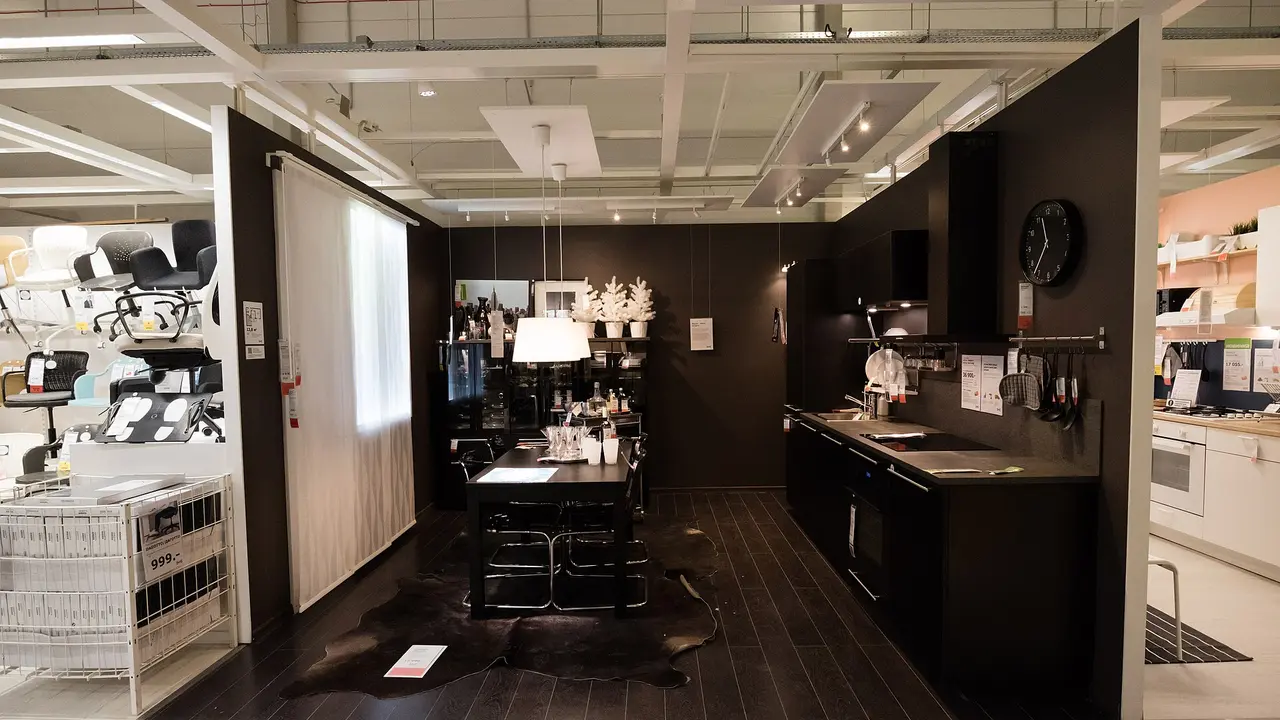
The urban store does not replace the giant warehouse; it changes the relationship. It allows the brand to reach an audience that may not plan a Saturday expedition, but wants to see a material, test a chair, order a solution, and have it delivered. For a brand built on physical experience, that proximity matters. It makes the low price visible in daily life, not only in a digital catalogue.
Ikea is therefore moving on two fronts: lowering perceived cost and increasing practical access. It is a fairly complete response to consumer fatigue. When money is scarce, time is scarce too. A brand that requires too much effort to buy loses part of its advantage, even when its prices are good. Convenience becomes another field of democratization.
Why This Move Goes Beyond Furniture
This Ikea decision speaks to all European retail. It shows that a major brand can choose to defend demand through price without abandoning its story. At a time when many players are raising prices to protect margins, Ikea is taking the opposite bet: accepting tighter profitability in order to remain inside homes and gain volume, visits, and loyalty. It is a lesson for fashion, beauty, and even certain premium houses searching for the right balance between desire and accessibility.
The move also reveals a social divide in design. While some brands sell interiors as prestige scenery, Ikea reminds the market that the interior is first an infrastructure of life. A comfortable chair, simple storage, and a better-organized bedroom can have more daily impact than a rare object. That idea is not new, but it regains political force when housing becomes more expensive than imagination.
The battle will not be won by an announcement. It will play out in stores, delivery times, perceived quality, and the ability to maintain those prices despite energy, currency, and logistics pressures. But Ikea has sent a clear signal: in a nervous economy, popular design can become offensive again. The next symbol of power may not be a rarer object. It may be an object that millions of people can still afford without giving up everything else.
Sources
- Reuters via RTE, Ikea price-cut announcement and market-by-market details, September 1, 2026.
- Ingka Group, official release on the EUR 1.2 billion investment, September 1, 2026.
- Ikea Global, corporate announcement on affordability and Inter Ikea’s role, September 1, 2026.
- Business Insider, summary of price reductions on iconic products, September 2, 2026.