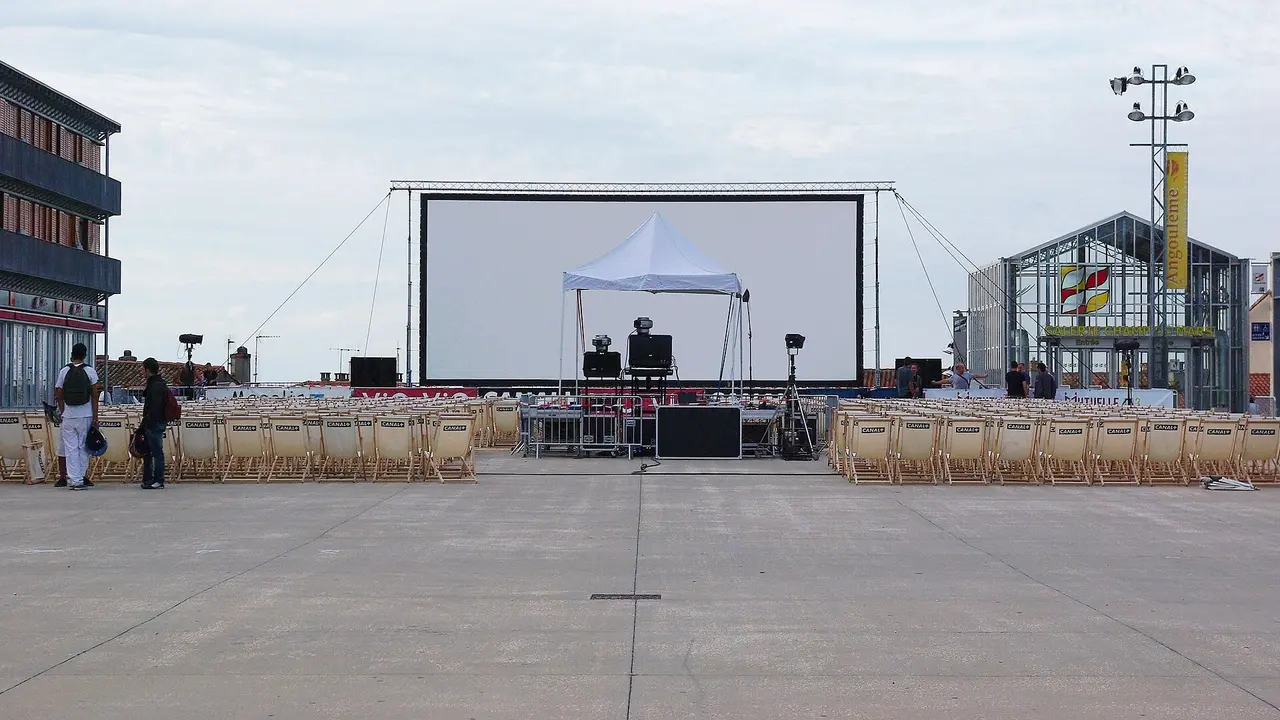
In Angoulême, the return of Francophone cinema does not begin with a simple red carpet. It begins with a real-life test. From August 24 to 29, 2026, the 19th edition of the Francophone Film Festival brings together the public, distributors, directors, and actors around films that will play a part in their future in theaters. The opening with Ni vue, ni connue, the new film by Marc Fitoussi featuring Isabelle Huppert and Sandrine Kiberlain, immediately gives this edition a popular and ambitious face.
In an industry shaken by streaming competition, the concentration of releases, and the difficulty of establishing new talents, Angoulême occupies a unique position. The festival is neither a copy of Cannes nor a meeting reserved for professionals. It puts films in front of audiences who buy their tickets, react in theaters, and can transform a premiere into the first wave of word-of-mouth.
Isabelle Huppert and Sandrine Kiberlain Kick Off the 2026 Edition
The choice of Ni vue, ni connue for the opening places two major figures of French cinema at the center of the first evening. Marc Fitoussi’s film is screened in advance at the Angoulême theater, as well as in the city’s cinemas. This simultaneous presence of recognized stars and a broad audience encapsulates the festival’s formula: creating closeness without sacrificing the event.
The program goes well beyond this lineup. Ten films comprise the announced competition, including Les Princes by Antoine Giorgini, La Frappe by Julien Gaspar-Oliveri, Congo Boy by Rafiki Fariala, and Si tu penses bien by Géraldine Nakache. The premieres also include projects from Jean-Pierre Jeunet, Lukas Dhont, Léa Mysius, and Martin Provost. Closing the festival, Dix pour cent, le film by Ãmilie Noblet will reunite its cast in Angoulême.
A Jury Led by Franck Dubosc and a Tribute to Nathalie Baye
The 2026 jury is chaired by Franck Dubosc. Among its members are Marie-Christine Barrault, Déborah Lukumuena, Jean-Paul Salomé, Rose-Marie Perreault, Julien de Saint Jean, and singer Marine. This composition blends performers, filmmakers, critics, and literature, with a clear mission: to distinguish very different works without reducing Francophone cinema to a single genre or generation.
This edition also pays tribute to Nathalie Baye through a retrospective of films that are sometimes less known to the general public. This choice reminds us that festivals are not only for launching new works. They also maintain the memory of cinema, restore visibility to important roles, and allow for a reevaluation of a career beyond its most famous titles.
Cambodia Adds a Global Dimension to the Event
Cambodia is the guest country of this 19th edition. This honor brings an essential counterpoint to a program largely focused on France, Belgium, Quebec, and other Francophone regions. It opens a window onto a cinematography marked by history, memory, and a new generation of creators.
The gesture is also strategic. The Francophonie of cinema is not limited to a common language: it constitutes a network of co-productions, festivals, distributors, and audiences spread across several continents. By shining a light on Rendez-vous avec Pol Pot by Rithy Panh, Angoulême connects recent heritage, the international circulation of works, and dialogue between Europe and Asia.
Why Angoulême Can Change a Film’s Trajectory
The National Center for Cinema describes Angoulême as a barometer and an accelerator. The reason is concrete: distributors observe reactions during screenings, listen to conversations at the exit, and assess whether the chosen positioning corresponds to what the audience actually felt. An enthusiastic audience can lead to an expanded release plan, a revised trailer, or an emphasis on an unexpected aspect of the film.
The case of a political thriller presented at a previous edition showed how a popular reception could instill confidence in a distributor and alter the scale of the intended release. In 2026, the mechanism remains the same. La Frappe, set to hit theaters on September 2, arrives in Angoulême just days before its launch. Conversely, Les Princes, scheduled for 2027, can begin to build its identity and audience very early on.
A Decisive Battle for French Cinema
The term battle is not excessive. Each week, numerous films compete for a limited number of screens, articles, viewed trailers, and recommendations. Independent productions and debut feature films rarely have the marketing power of major international franchises. An accessible festival can offer them what they lack the most: an identifiable meeting, human reactions, and a media narrative.
Thus, Angoulême defends an almost radical idea in the age of algorithms: the audience is not just a data point to predict. It can become a launch partner. Spectators see works before their general release, engage with the teams, and participate in the nascent reputation of a film. This closeness distinguishes the festival from events where the industry primarily speaks to itself.
Signals to Watch Until the Awards Ceremony
From now until the awarding of the Valois on August 29, three signals will matter. The first will be the reception of the films in competition, particularly the debut features. The second will be the ability of major premieres to create lasting desire beyond the presence of stars. The third will be the visibility given to Cambodia and, more broadly, to the real diversity of the Francophone space.
While the awards will be significant, they will not tell the whole story. A film can leave without a trophy and have gained allies among exhibitors, journalists, and spectators. Conversely, an impressive lineup does not guarantee that enthusiasm will survive the first screening. It is this uncertainty that gives Angoulême its unique tension.
By launching its 19th edition with Isabelle Huppert, Sandrine Kiberlain, and an open program from Cambodia to Quebec, Angoulême is not only celebrating Francophone cinema: the festival is deciding which films will enter the fall with a head start. For six days, Charente becomes the place where promises meet their first public verdict.