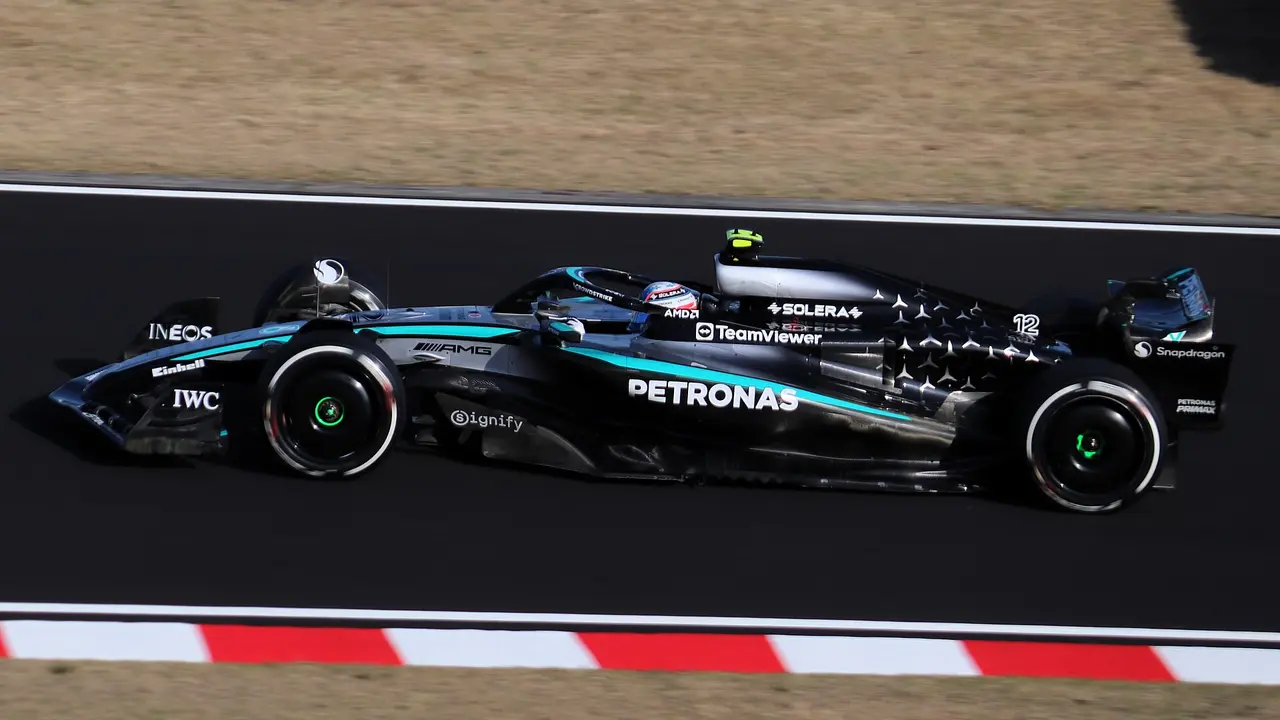
Monza had waited sixty years for an Italian hero. He came from the back of the grid. On Sunday, September 6, 2026, Andrea Kimi Antonelli won the Italian Formula 1 Grand Prix after starting 19th. The Mercedes driver passed team mate and title rival George Russell in the closing laps, then crossed the line 3.857 seconds ahead. Before the red grandstands of the temple of speed, an extraordinary recovery became a moment of national history.
Antonelli is the first Italian to win the Italian Grand Prix since Ludovico Scarfiotti in 1966. He also strengthened his championship lead to 66 points over Russell after the race. Max Verstappen completed the podium ahead of Lando Norris and Oscar Piastri. Mercedes secured a one-two, but the defining image belonged to the home driver celebrating after beginning the afternoon almost last.
An impossible comeback becomes reality
Antonelli’s weekend had turned against him before the start. A power-unit penalty sent him to the rear of the grid while Russell had an ideal opportunity to close the championship gap. Pierre Gasly had taken a sensational maiden pole for Alpine. On paper, the Italian leader appeared destined to spend the race limiting the damage.
The Grand Prix quickly destroyed that script. Antonelli gained places with discipline, using the incidents around him without becoming trapped in the disorder. A virtual safety car helped him exploit fresher tyres before he chased Russell in the final phase. Even a brief trip through the gravel while attacking failed to break his momentum. Across 53 laps, he combined pace, patience and aggression at precisely the moments required.
Italy’s first home winner since 1966
The statistic gives the result a meaning beyond the standings. No Italian had won this race since Scarfiotti triumphed for Ferrari on September 4, 1966. Generations of drivers tried to satisfy the hopes of the home crowd, but victory remained out of reach. Antonelli ended the wait exactly sixty years later while competing for the world championship.
Starting 19th and winning also represents one of the greatest recoveries in the history of the Italian Grand Prix. Monza’s long straights create overtaking chances, yet the circuit still demands extreme aerodynamic efficiency, exact braking and strategy capable of adapting to interruptions. Antonelli did not simply benefit from fortune. He converted every opportunity into progress.
Mercedes dominates as Ferrari suffers
The Antonelli-Russell finish confirmed Mercedes’ strength. Russell controlled much of the race and looked capable of recovering championship points, but his team mate’s newer tyres and late pace proved decisive. The next round in Madrid will arrive with a clearer hierarchy and sharper tension inside the team.
Ferrari endured the opposite experience at its home race. Charles Leclerc crashed heavily at the Parabolica in the opening laps while fighting Oscar Piastri. He escaped injury, but the car was destroyed and a red flag interrupted the race. Lewis Hamilton rescued sixth place without delivering the podium the crowd wanted. Monza’s red grandstands celebrated an Italian, but not a Ferrari.
Gasly supplies the French highlight
Pierre Gasly remained the weekend’s other major figure. The Alpine driver stunned the field on Saturday with the first pole position of his career. Against the powerful Mercedes cars and the championship’s leading machines, he ultimately finished seventh. That result may appear modest after qualifying, yet the performance offered Alpine an important sign of progress on a circuit where engine power is decisive.
Gasly could not turn pole into a podium, but his qualifying lap and resistance in the leading group placed France at the heart of a global sporting event. The weekend carried a distinctly European story: an Italian winner, a German team celebrating a one-two and a French driver producing the surprise of qualifying.
Why this victory can reshape the 2026 season
Championships are decided by points and by psychological moments. Antonelli might have left Monza weakened by his penalty, with Russell closing in. Instead he leaves with a victory, a larger advantage and dramatic evidence that he can win through adversity. Recovering from 19th under the pressure of a home crowd is a test few young drivers face so early.
The result also confirms Formula 1’s generational shift. Antonelli no longer represents only the future; he leads the present. Against Russell, Verstappen, Norris and Piastri, he is building a campaign defined by youth, consistency and nerve. Monza may become the reference point for his season, especially if it ends with a world title.
The calendar offers no pause. The paddock now turns toward the new Madrid Grand Prix, where Mercedes must manage its internal battle and Red Bull and McLaren will try to keep the title race alive. Ferrari must recover from a painful home defeat. Whatever follows, one truth is fixed: on September 6, 2026, Monza found an Italian winner again and Formula 1 gained one of its most powerful stories.