
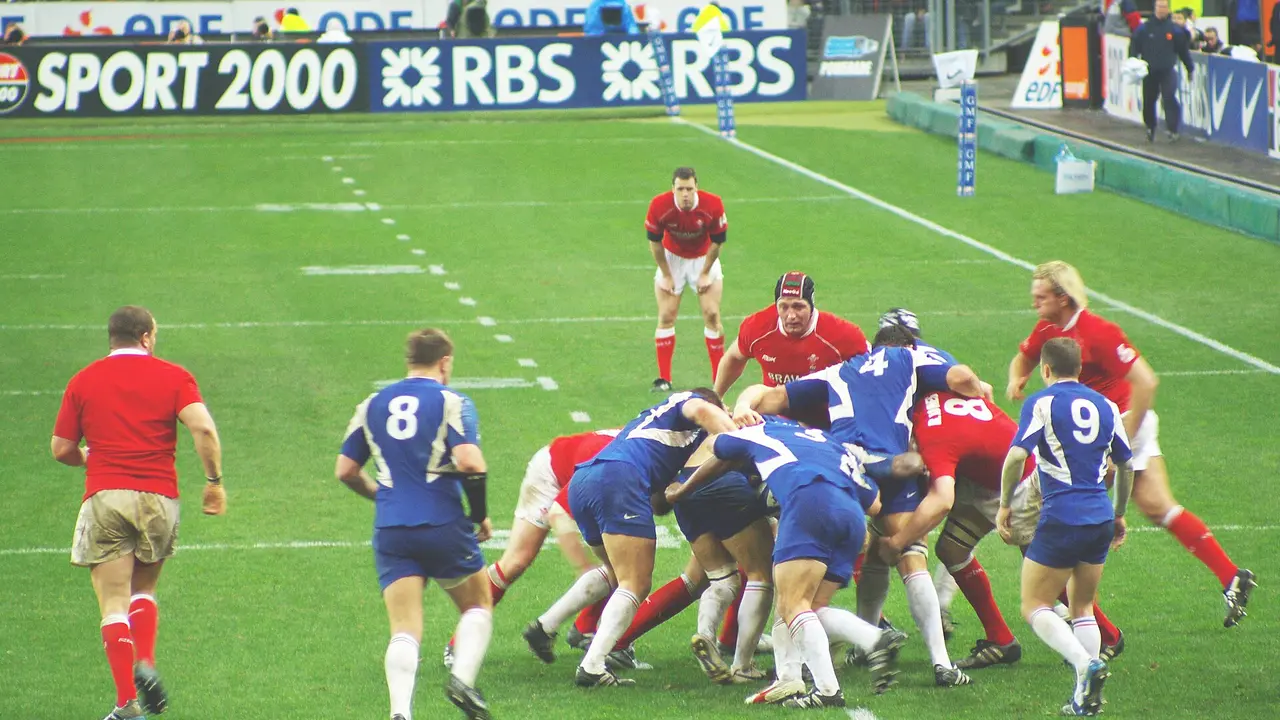
The XV de France fell 34-32 to New Zealand this Saturday, July 4, 2026, but the score only tells part of the story. In the opener of the new Nations Championship, Les Bleus lost by just two points against the All Blacks, on their own turf, in a match watched well beyond the circle of rugby enthusiasts. This fixture carried special symbolic value: it served both as a test for France and as the launch of a competition World Rugby presents as a new backbone of the international calendar.
In short, France didn’t win, but it sent a message. At a time when world rugby is trying to become more readable, more profitable and more spectacular, a France vs New Zealand this tight in the opening match is exactly the kind of scenario organisers wanted to produce. For Les Bleus, this also changes how the result is read: this defeat isn’t a fall, it’s a warning shot fired at the rest of the competition.
A narrow defeat, but a real narrative shift
The most important thing about this 34-32 isn’t just the tiny margin. It’s the fact that France went the distance against one of the most powerful sporting brands in the world, the All Blacks, in the first major fixture of a tournament designed to pit North against South on a lasting basis. Le Monde stresses that Les Bleus stayed with New Zealand in this inaugural match. L’Equipe, for its part, describes a frantic duel at the end of which France came out beaten. Both readings converge: France lost, but made New Zealand’s win anything but comfortable.
This detail matters enormously on the international scale. For years, the great nations of the North often suffered from a kind of psychological ceiling against the giants of the South in major fixtures. Here, France showed it could survive the pace, the pressure and the physical density of a context meant to serve as a global showcase for New Zealand. In a sport as obsessed with mental benchmarks as with game plans, that’s worth almost as much as a foundational win.
Why this match matters more than a simple summer test
The new Nations Championship isn’t just another friendly tour. World Rugby designed it as a structural competition, meant to punctuate even years outside the World Cup and outside British and Irish Lions tours. The idea is simple: make every international window more readable, more competitive and better followed by the media, with premium fixtures between the best teams of the North and South.
The Guardian noted before kickoff that this inaugural edition was set to pit Europe’s great powers against the major nations of the southern hemisphere, in a tighter, more commercial format. In that logic, New Zealand vs France wasn’t just another match: it was the flagship product. Had the encounter turned into a one-sided demonstration, the launch effect would have been weaker. Instead, this battle fought to the final moments reinforces the idea that the tournament can create real competitive tension, not just a string of fixtures that look prestigious on paper.
For France, the stakes therefore go well beyond the match sheet. Les Bleus immediately position themselves as a major player in this new architecture. In a sport where England, Ireland, South Africa and New Zealand are already fighting to impose their cultural as much as sporting dominance, being credible from day one of a global competition carries enormous value.
The France angle remains intact
What makes this result even more interesting for the French public is that it comes at a time when French rugby keeps searching for its next great summit. France no longer arrives with the profile of a quaint underdog. It arrives as a nation that’s expected, watched, analysed, sometimes even feared. This shift changes everything: a narrow defeat to the All Blacks is no longer celebrated as a simple moral achievement, it’s scrutinised as the sign of a team that must learn to convert its great moments into signature wins.
In other words, the bar has risen. And that’s good news for French rugby. It proves the XV de France now belongs to the circle of teams judged on their ability to beat the best, not merely to stay with them. In the sport’s vast storytelling machine, this change of status is fundamental. It brings France closer to a level where every match against a southern nation becomes a rugby geopolitical event, not just a summer fixture.
World rugby enters a new economy of tension
This France-All Blacks match also says something broader about rugby’s future. The sport has spent years trying to better organise its premium clashes, clarify its calendar and win over a wider audience. The new Nations Championship is meant to answer that ambition. But for such a project to work, it needs strong stories, immediate rivalries, matches that make you want to come back the following weekend.
Saturday’s 34-32 ticks every box. It gives the competition its first great story: a France on the brink of an upset, a New Zealand forced to go the distance, and a tournament opening with a promise of density rather than crushing hierarchy. That’s not a marketing footnote. It’s what determines whether a new format can become a genuine global fixture or remain just one more institutional object.
From that angle, France has already won something. It helped legitimise the competition while reminding everyone it could be one of its most attractive faces. For a federation, for broadcasters and for the image of French rugby, this narrative capital is precious.
What Les Bleus need to fix now
It would still be dangerous to turn this honourable defeat into comfortable satisfaction. The margin remains on New Zealand’s side, since it was the All Blacks who closed out the match four points clear. At this level, great nations distinguish themselves precisely through their ability to lock down the pivotal moments. France showed it was in touch. The next step is to tip those closing moments in its own favour.
That’s the difference between a very strong team and a team that defines an era. Les Bleus already have the ingredients to shake up the established order: depth, ambition, international credibility, media appeal. The lock still to break is consistency at the very top level. This kind of match exists precisely for that: turning narrow frustration into concrete progress.
A defeat that could weigh heavily going forward
In the short term, this 34-32 leaves frustration. In the medium term, it could carry real weight. Because it reminds everyone that France is one of the rare nations capable of pushing the All Blacks to their limits at the opening of a globally watched tournament. Because it gives the Nations Championship a dramatic, and therefore successful, launch. And because it confirms that in 2026, France remains one of international rugby’s centres of gravity.
The most interesting part may be the outside perception that follows. When a team loses by two points in this kind of context, opponents don’t just remember the result. They remember the threat. France comes out beaten, yes, but strengthened in the eyes of world rugby. That’s why this match already matters more than a single line in a summer calendar.