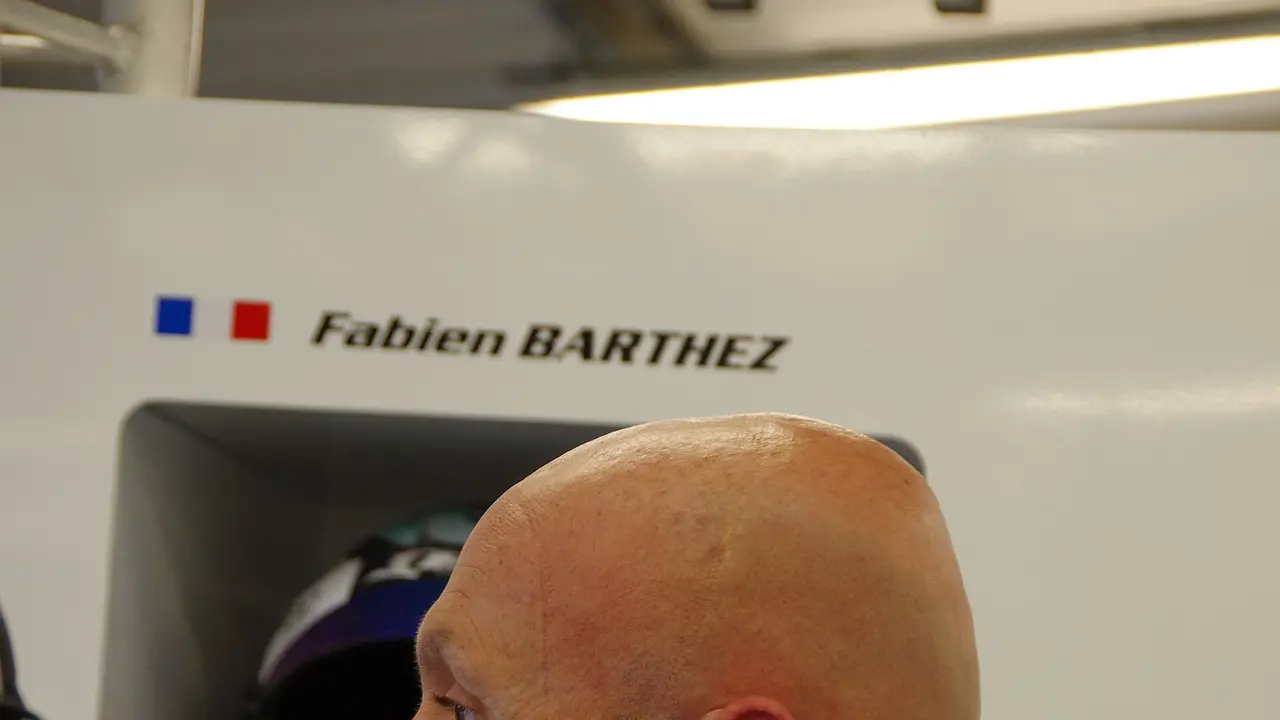
An image that France hasn’t seen in twenty years is about to become a reality. Zinédine Zidane and Fabien Barthez, World Champions in 1998 and European Champions in 2000, will once again work under the same jersey. This time, they will no longer be on the pitch: Zidane now leads the Blues, and Barthez joins his staff as the goalkeeping coach. Behind the nostalgic power of this reunion lies the first major decision of the new coach.
The French Football Federation unveiled a preliminary list of collaborators surrounding Zidane on Thursday, August 13. According to Le Monde and the Spanish daily AS, Fabien Barthez holds the position of goalkeeping coach. The complete staff is expected to be finalized and presented at the beginning of September, ahead of the first match of the new cycle, scheduled for September 25 in Turkey as part of the Nations League.
Twenty Years Later, the Return of a Historic Duo
Zidane and Barthez shared the greatest moments in the modern history of French football. Together, they won the 1998 World Cup, the Euro 2000, and reached the final of the 2006 World Cup. Their last international match together remains that final lost to Italy in Berlin. Two decades later, their paths cross again to launch the post-Deschamps era.
The symbolism is irresistible, but the choice is not merely sentimental. Barthez, 55, understands the demands of the highest level, the weight of the French jersey, and the specific pressure that comes with the goalkeeper position. Having played for Toulouse, Monaco, Manchester United, Marseille, and Nantes, he won the Champions League with OM in 1993 and accumulated 87 caps. He had already joined the Blues’ coaching staff in 2010 as a technical advisor for goalkeepers under Laurent Blanc.
Zidane’s First Strong Decision
During his presentation on July 28, Zidane announced that he would remain loyal to the men he had worked with. The initial composition of his team confirms this promise. David Bettoni and Hamidou Msaidie, his assistants during his stints at Real Madrid, will accompany him. Grégory Dupont returns to physical preparation after participating in France’s 2018 World Cup victory and then working at Real. Stéphane Plancque joins the video analysis team.
This mix of loyal Madrid associates and familiar faces from Clairefontaine reveals Zidane’s method: to quickly create a circle of trust, reduce adaptation time, and establish clear authority. In a national team, where gatherings are short, staff cohesion can become a decisive advantage. Every session counts, every message must be understood immediately, and responsibilities cannot remain vague.
Barthez Faces the Goalkeeper Challenge
The role of goalkeeping coach is no longer limited to organizing reflex exercises. Modern football demands a goalkeeper capable of participating in the first build-up, defending away from their line, reading the opposing press, and communicating constantly with their defense. Barthez will need to articulate this modern legacy with the identity that Zidane wishes to instill in the Blues.
He succeeds Franck Raviot, who was present throughout Didier Deschamps’ era. This change marks a significant break in a sector where continuity had long prevailed. The hierarchy of goalkeepers, their technical profile, and their ability to perform under pressure will be scrutinized from the first lists. Barthez brings a rare experience: that of a goalkeeper who has faced penalty shootouts, World Cup finals, giant clubs, and constant media exposure.
An Almost Entirely Renewed Staff
The arrival of Zidane is not merely a touch-up. Le Monde emphasizes that Didier Deschamps’ team is almost entirely overhauled. Among about fifteen members, only assistant video analyst Clément Ybert and journalist Guillaume Bigot are reported to remain. Mohamed Sanhadji, responsible for security and close to the players, is also expected to continue his mission.
This renewal gives Zidane control over his environment, but it also increases his responsibility. A new staff must preserve the knowledge accumulated over fourteen years without becoming trapped by old habits. They must establish common methods, share medical and physical information, and build a trusting relationship with internationals scattered across the biggest European clubs.
Why This Reunion Goes Beyond Nostalgia
The return of the Zidane-Barthez duo resonates immediately with several generations. For those who lived through 1998, it evokes the night of July 12 and the first world title. For younger fans, it brings together two names that have become legendary through archives, documentaries, and video games. This emotional strength offers the FFF a popular narrative at a time when the national team embarks on a new era.
However, nostalgia will not win any matches. Zidane and Barthez will be judged on their decisions, player development, and results. Prestige facilitates initial buy-in; it does not guarantee tactical balance or success in tight matches. Their challenge is precisely to transform immense symbolic capital into a contemporary working method.
The First Test is Already Coming
The schedule leaves little time for the new leaders. The trip to Turkey on September 25 will mark the beginning of Zidane’s mandate in the Nations League. This first match will not be enough to define the project, but it will provide clues about the hierarchy, the style of play, the composition of the defense, and the relationship between the captain and the new staff.
In the medium term, the goal will be Euro 2028, the first major competition of the new cycle. Zidane has signed on for four years, until the 2030 World Cup. France has an exceptional pool of talent and global visibility, but expectations are commensurate with the names present on the bench. Each selection and every result will be subject to international scrutiny.
France Reunites with Its Heroes, the World Awaits Results
Seeing Zidane and Barthez reunited under the blue jersey is a promise of emotion, not yet a promise of victory. Their shared history gives them immediate legitimacy and an intimate understanding of the French pressure. Their experience can help protect the group, establish high demands, and convey the culture of major competitions.
The new adventure thus begins with a powerful image: two heroes from 1998 return to guide a generation that must write its own story. France can celebrate the reunion. From September onward, it will primarily look at what this duo brings to the pitch. It is there that the symbol must become a project.
Sources
- Le Monde, August 13, 2026, initial staff composition, role of Fabien Barthez, and presentation schedule.
- AS, August 13, 2026, confirmation of Barthez’s return and the sporting context of the duo.
- FIFA, July 28, 2026, appointment of Zinédine Zidane and duration of his mandate.
- French Football Federation, official information about the France team.